
U.S. military officials visit Ukraine as reports emerge of a proposed Russia peace plan
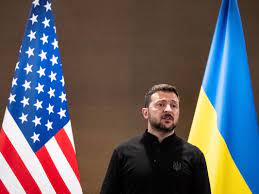
The delegation led by U.S. Army Secretary Dan Driscoll is scheduled to meet Ukrainian President Volodymyr Zelensky in Kyiv on Thursday.
Their visit comes as reports circulated on Wednesday claiming that Washington and Moscow have been working on a new draft peace framework. The alleged plan would require major concessions from Kyiv, including surrendering territory still under Ukrainian control and sharply reducing the size of its military.
The proposal, reportedly written by President Donald Trump’s envoy Steve Witkoff and Russian special envoy Kirill Dmitriev, has not been officially acknowledged by either government.
U.S. Secretary of State Marco Rubio wrote on X that any “durable peace will require both sides to agree to difficult but necessary concessions,” adding that Washington is continuing to develop a set of potential ideas for ending the war based on input from both parties to the conflict.
European officials reacted cautiously. EU foreign policy chief Kaja Kallas stressed that no plan would be viable without support from Ukrainians and Europeans. France’s foreign minister, Jean-Noël Barrot, warned that “the Ukrainians do not want any form of capitulation.”
The emergence of these reports coincided with a deadly Russian missile and drone strike on apartment buildings in Ternopil in western Ukraine, which killed at least 26 people. Another 22 remain missing, Zelensky said on Thursday.
Russia launched its full-scale invasion of Ukraine in 2022.
Zelensky had been in Turkey during the attack. Ukrainian media suggested that a meeting with Trump’s envoy may have been planned in Ankara but was later canceled.
There was no mention of the reported peace framework when Driscoll arrived in Kyiv late Wednesday. Army spokesperson Col. David Butler said only that Driscoll’s team was visiting “on behalf of the [Trump] administration on a fact-finding mission to meet Ukrainian officials and discuss efforts to end the war.”
Driscoll is the most senior U.S. military official to visit Kyiv since Trump took office in January. He is accompanied by Army Chief of Staff Gen. Randy George, U.S. Army Europe commander Gen. Chris Donahue, and Sergeant Major of the Army Michael Weimer.
A Ukrainian official told CBS News, the BBC’s U.S. partner, that the discussions would address the battlefield situation and possible ceasefire arrangements. According to the official, Zelensky and Trump have already agreed to halt fighting along current front lines and have discussed security guarantees.
Russian strikes also hit the eastern city of Dnipro overnight on Monday, damaging residential buildings and infrastructure.
After his meeting with Driscoll, Ukrainian Defence Minister Denys Shmyhal wrote on X that the talks focused on implementing “historic defence agreements” struck between Zelensky and Trump.
Details of the reported 28-point Witkoff–Dmitriev plan surfaced more than three weeks after the two men allegedly held three days of talks in Miami. European and Ukrainian officials are not believed to have participated.
Reports from Axios, the Financial Times and Reuters—citing people familiar with the discussions—say the draft plan would require Kyiv to relinquish remaining territory in the Donbas, dramatically reduce troop numbers, and give up large quantities of weapons. Zelensky has consistently rejected the idea of any territorial concessions.
Dmitriev’s office declined to comment, and the BBC has requested responses from the White House and a representative for Witkoff.
Kremlin spokesperson Dmitry Peskov played down the reports, saying there was nothing new beyond the “spirit of Anchorage”—a reference to Putin and Trump’s August summit in Alaska. Any agreements from that meeting have not been disclosed.
Ukraine and its Western allies, including the U.S., have called for an immediate ceasefire along the front line. Russia has rejected this, repeating conditions that Ukraine says would amount to surrender.
Earlier this month, Russian Foreign Minister Sergei Lavrov said Moscow’s preconditions for a peace deal—territorial concessions, strict limits on Ukraine’s military, and neutrality—remain unchanged from those President Vladimir Putin outlined in 2024.
Meanwhile, the White House confirmed to the BBC that special envoy to Ukraine Keith Kellogg will step down in January. He reportedly views this as a natural endpoint to his tenure, which would otherwise require Senate approval past 360 days. Kellogg has been seen as a key advocate for Ukraine within an administration whose president has often appeared sympathetic to Russia’s position.
About The Author
